You might have been thinking of volunteering somewhere in South America, but don't know where to go yet. Would you like to visit a place with a great culture, an interesting history and a country to live various adventures? You might want to visit a country that has great ecosystem variety, and wonderful traditions. And, do you want to experience all this while doing something good for somebody else? Then you need to volunteer in Argentina!
Argentina was colonized by Spain, like most Latin American countries, in the 16th century. But in the 19th century the nation formed a federal state, known today as the Republic of Argentina. Today, it is the second largest economy in South America, and a member of the G-15 and G-20 major economies. It is the country with the highest Human Development Index in Latin America, and because of its stability, and continuous technological improvement, it is classified as a high-income country.
[accordion]
[item title="Top 6 fun facts about Argentina"]
[/accordion]
Argentina covers most of the southern South America, and it is bordered by Chile, Bolivia, Uruguay and Paraguay. The country can be grouped into four regions: The Andes, the North, the Pampas, and the Patagonia. And although the country has great biodiversity and a significant variety in climates, it struggles to keep its environment unpolluted.
The major environmental issues Argentina faces are air and water pollution, as well as the loss of agricultural lands. Argentina's soil is mainly threatened by erosion, salinization, and deforestation; and air is highly polluted due to chemical agents from industrial sources. Nevertheless, in 2003 about 6.6% of the total area of the country was considered as protected land. Argentina has four natural areas, that are considered UNESCO World Heritage Sites: Los Glaciares, Iguazu National Park, Peninsula Valdes and Ischigualasto/Talampaya National Parks. Additionally to this, Argentina has 14 sites designated as Ramsar Wetlands of International Importance.

The Argentinean mountains on the West are home to all sorts of animals, including the llama, the guanaco, and vicuña which are the most recognizable species of South America. Also, part of this region are the fox, viscacha, Andean mountain cat, and the largest flying bird in the New World: the Andean condor.
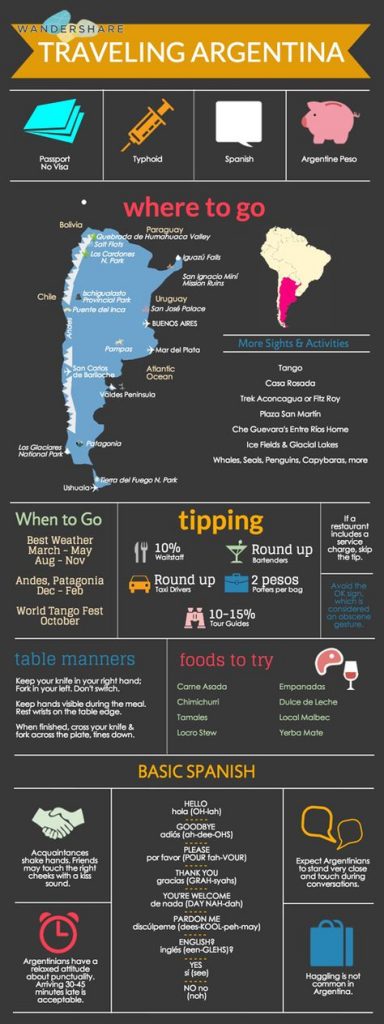
The region around Bariloche is a unique location for vegetation, as well. Here, the vegetation has been able to flourish with many different types of pine, fir and cedars in abundance. The region is often compared to the Alps in Europe, and this area is filled with wildflowers during the spring months. On the other side, right at the foot of Argentina, at the Tierra del Fuego (literally: Land of Fire), it is cold but it is a region where the famous Lenga can be found in abundance; as well as many evergreens.
Argentina's health care system is divided in three sectors: the public sector, that is financed through taxes, the private sector, which is financed through voluntary insurance schemes; and the social security sector, financed through obligatory, insurance schemes. The responsible of regulating these sectors is the Ministry of Health (MSAL). The Ministry also evaluates these sectors and collects statistics.
The public sector is funded and managed by Obras Sociales (in English: Social Works), which are umbrella organizations for Argentine workers' unions. There are over 300 Obras Sociales in Argentina and they vary greatly in quality and efectiveness. Only workers that are employed in the formal sector are covered under Obras Sociales insurance schemes.
On the other hand, the private health care sector in Argentina is characterized by great heterogeneity and it consists of a great number of fragmented entities and small networks. It is formed by over 200 organizations and covers approximately 2 million Argentines. Finally, the public system is highly decentralized, and it is administered at the provincial level. Since 2001, a great number of Argentines have been increasingly relying on public services.

Education in Argentina guarantees that education won't be commercialized, and that it will favour multhi-ethnic populations; as well as special education. This is probably the reason why illiteracy rate in Argentina is 1.9%; the second lowest in Latin America. The country is very progressive on this matter, it is so that in the last decade, the country has created nine new universities. But, even though education in Argentina has always been free, there is a large number of private schools and universities, as well.
Education in Argentina is divided in four levels and two different systems (one with duration of 7 years, and the other one with duration of 6 years): initial level, primary level, secondary level, and tertiary level. In both systems of Educación Primaria (grades 1st to 7th), is mandatory to all students; as well as secondary education, according to the National Educational Law established in 2011.

But even though Argentina shares a high level of multiculturalism and stability, it has lost many of its most talented professionals over the years; due to the country's economic instability and lower wages. Nevertheless, it continues its commitment to cultivate the most educated work force possible.
This is just an estimate of the costs of living as a volunteer in Argentina. While this is only an estimation of what a single person might spend in US Dollars in the country, you should be aware that costs might vary with time. So, saving money to cover your expenses as a volunteer in Argentina is key to have a happy trip! We want to give you a general idea of how the country does economically, and how much money you should consider saving to volunteer in Argentina, to travel and for leisure.
 |
 |
 |
 |
 |
| Hotel $100 | Big Mac® $2.39 | Coca-Cola® $1.39 | Eating out $1o.20 | Rental car $385 /week |
 |
 |
 |
 |
 |
| Hostel $15 | Marlboro™ $2.25 | Beer $2.25 | Fuel $1.20 | Public transport $0.44 |
Seasons in Argentina are opposite to those in the Northern Hemisphere. And its climate is classified as temperate. However, climate varies depending on the region, from North to South in the case of temperature; and from East to West, in the case of humidity.
Summer (December-May)
Resorts are packed, and temperature is hot and great during this season! While Buenos Aires becomes somewhat deserted of locals, the beaches and resort towns are packed with tourists and vacationing Argentines. This is also a great time to plan a trip to Patagonia and the Andes; because days are usually longer and warmer during these months.
Winter (June-August)
This is the best time to visit Iguazú and the Northwest part of Argentina. In this time of year, the rains and heat have subsided; it is usually referred as the dry season. The Northwest is generally hot but high-altitude deserts cool off substantially in the evenings, to a point where the perceived temperature can be close to freezing.
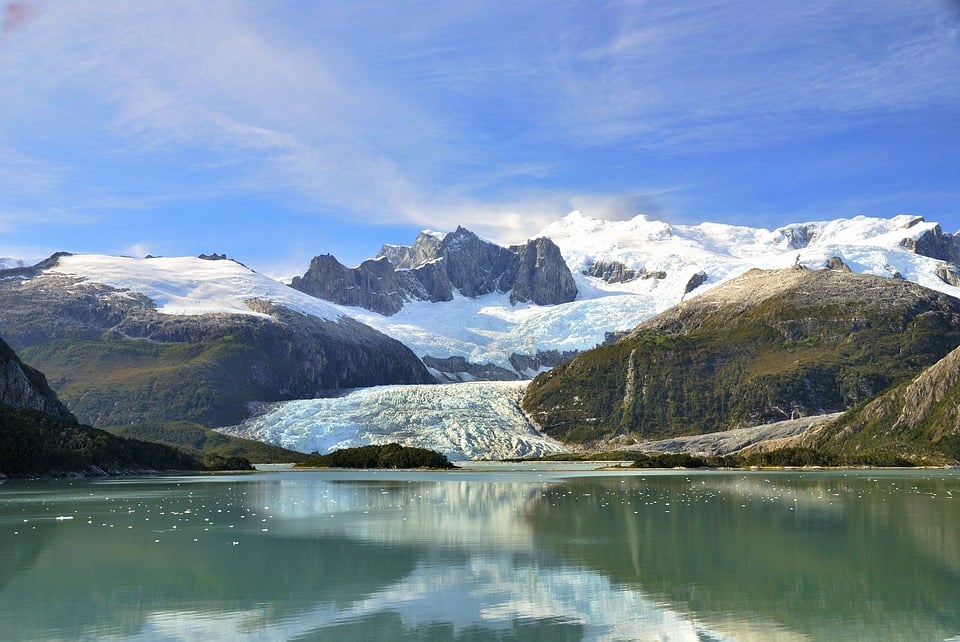
[caption id="attachment_11896" align="aligncenter" width="960"]
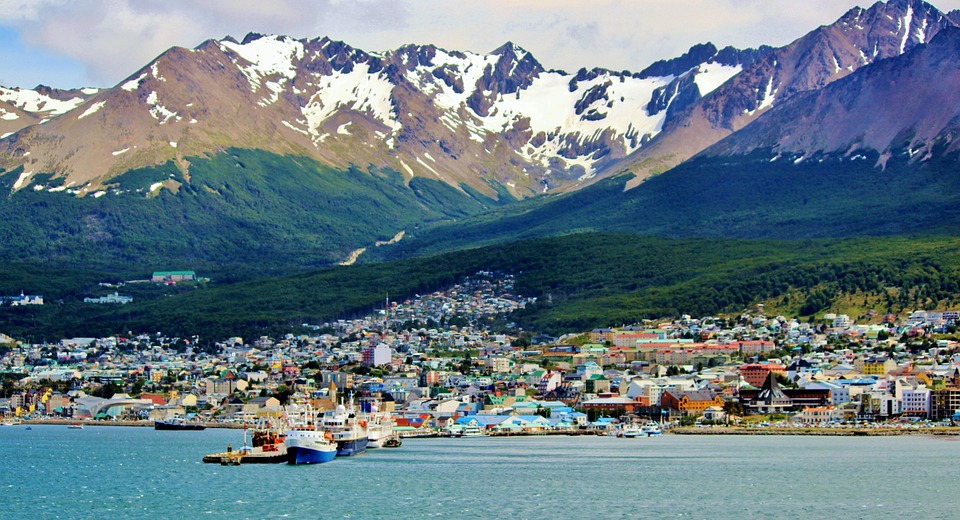
Patagonia, Argentina[/caption]
[accordion]
[item title="Safety"]
You should expect crimes of opportunity, such as distraction thefts in Argentina; which usually occur in popular tourist areas and in other public areas, such as buses, train stations, subways, airports, etc. Pickpocketers and bag snatchers often work in pairs or groups and employ a variety of tactics to divert their victims and then robbing them while they rob them. We suggest to take this advice, to avoid any uncomfortable situations when you volunteering in Argentina:
[item title="Law"]
[item title="Social Etiquette"]Most Argentines are primarily of European descent, which makes them slightly different from other Latin American countries, where European and Indian cultures are more mixed. But there are some cultural aspects, where they show that they are as Latin American as any of their neighbours:
[item title="Packing Essentials"]
[/accordion]
At this point, you have already received an extensive amount of information about what you should expect as a volunteer in Argentina. It is time that we tell you all about the fun and interesting activities you'll get to do in this beautiful country. There is certainly a lot to do and see in Argentina, so we will just mention some of the various places you should go, and some of the activities and festivals you might want to attend. Have fun!
Be ready to experience the best of Argentina- the wine, the mate, the fishing, the tango, the mountaineering, the literature, the beef, the architecture, the clubbing! You will have one of the most exciting journeys you’ll ever have. So, let’s get started!
[accordion]
[item title="The Andes"]
[item title= "Iguazú Falls"] 
[item title="Puerto Madryn"]
[item title="Bariloche"]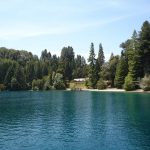
Argentina is a place to party, and as a volunteer in Argentina, you will have the opportunity to experience one of its many festivals is a perfect way of gaining a better understanding of the culture. There is a wide range of festivals throughout the year: from religious festivals to fiestas, which invite everyone to socialize and have a good time. This is not an extensive list of the festivals you might want to attend in Argentina, but one we hope you’d be interested in. Have fun!
[accordion]
[item title="Carnavales de Corrientes"]
[item title="Buenos Aires Tango Festival"]
[item title="La revolución de Mayo"]It is celebrated each year on May to mark the anniversary of Argentina's Independence from Spain in 1810. It is also called “Día Nacional” (National Day) and it is considered a public holiday in Argentina. During the Holiday, most public transportation is free for those attending the festivities. Celebrations start around mid-day and run late into the evening. On this day, Argentine people eat together, politicians make speeches and the country is brought together. [/item]
[item title="El Carnaval del Pais"]
[/accordion]
Argentina is slowly but surely becoming a tourist favourite destination. Whether you are lured by the romance of the country, the cosmopolitan city life or if you are on a quest to find the world’s best steak, Argentina has a lot to offer. I made a list of some of the country’s favourite dishes. You definitely need to try this.
[accordion]
[item title="Asado"]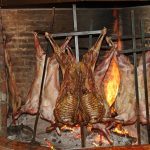
[item title="Chimichurri"]
[item title="Dulce de Leche"]
[item title="Empanadas"]
-You should be at least 18 years old to volunteer in Argentina (although some programs require a minimum of 22 years old).
-You should have an intermediate level of English knowledge; some programs require advanced English-knowledge or basic to intermediate Spanish knowledge.
-For some programs a health declaration, and a criminal background check is required; especially if you are working with children.
- To be enrolled or have been already finish at High School or University studies; some programs require to have a studies on Social Sciences, Social Work, Community Development, Medicine, Women Studies, etc.
-You need to send a CV and an application form for some programs.
-To have strong inter-personal skills, and experiences in working with a wide variety of people is expected from all volunteers. Other skills like dancing, drawing, sports, etc. can favour you as well!
-You need to commit with the program you choose to volunteer with. This means: do respect the schedule given to you!
You have arrived to the most boring part of this guide, but it is probably the most important part of planning your trip! You might want to get over with eat quickly, before you can move on with your plans to become a volunteer in Argentina! So, let's get started!
Citizens of all nations require a valid passport to enter Argentina, with exception of citizens of Bolivia, Brasil, Chile, Colombia, Paraguay, and Uruguay, who can travel with their identification cards. Argentina does not offer a "Volunteer Visa", so you will have to do volunteer work with a Tourist Visa. The following nations are exempt of issuing a Visa -however, some of them are required to pay a reciprocity fee:
United States of America (reciprocity fee), Andorra, Armenia, Australia (reciprocity fee), Austria, Barbados, Belgium, Bolivia, Brasil, Bulgaria, Canada (reciprocity fee), Chile, Colombia, Costa Rica, Croatia, Cyprus, Czech Republic, Denmark, Ecuador, El Salvador, Estonia, Finland, France, Germany, Greece, Guatemala, Guyana, Haiti, Holy See, Honduras, Hong Kong S.A.R., Hungary, Iceland, Ireland, Israel, Italy, Japan, Kazakhstan, Korea, Latvia, Liechtenstein, Lithuania, Luxembourg, Macedonia, Malta, Mexico, Monaco, Montenegro, the Netherlands, New Zealand, Nicaragua, Norway, Panama, Paraguay, Peru, Poland, Portugal, Romania, Russian Federation, Saint Kitts and Nevis, Saint Lucia, San Marino, Saint Vincent and the Grenadines, Serbia, Singapore, Slovakia, Slovenia, South Africa, Spain, Sweden, Switzerland, Thailand, Trinidad and Tobago, Turkey, Suriname, Ukraine and United Kingdom of Great Britain and Northern Ireland and Uruguay.
Specifications:
a) Citizens of the European Union and United States of America for stays no longer than 90 days.
b) Citizens of Bolivia, Brazil, Chile, Paraguay, Uruguay, Colombia, Costa Rica, Ecuador, El Salvador, Guatemala, Honduras, Mexico, Nicaragua, Panama, Peru, and Venezuela for stays of up to 90 days.
c) Citizens of all nations on transit, who will continue their trip within 6 hours of arrival, without abandoning the airport.
Note: These visa exemptions apply only for tourist and business trips. Tourist Visa extension is possible only for citizens of some nationalities; please consult this on the Consular Section of the Argentinean Embassy.
Elegibility:
If you still have doubts concerning the documentation you need to volunteer in Argentina, do not hesitate to approach the Argentinean Embassy or Consulate nearest to you! And if you have other questions concerning these and other topics, please visit Argentina’s tourism site and get all the answers you need! You are set!
Explore volunteer programs in Argentina and find your very own volunteer opportunity abroad on Volunteer World. Featuring more than 500 volunteer programs and over 600 social projects in 70+ countries, Volunteer World is a one-stop resource for volunteer abroad opportunities. This platform is all about bringing simplicity and transparency to the international volunteer industry.