When planning to volunteer abroad there are almost endless possible destinations. So why volunteer in Uganda? When thinking about Uganda, the first things that come to mind are often beautiful Lake Victoria and the rare mountain gorillas living high up in the forests. But there's so much more to explore and learn as a volunteer in Uganda. The country is home to the Big 5, the source of the Nile and the tallest mountain range in Africa. These are just a few of the things - along with the friendliness of its people - that slowly start to attract travellers from around the world. Slowly, because Uganda has been through a lot and looks back on some dark chapters in its history. And still there are many organizations working towards improvements in many areas. As a volunteer in Uganda, you can make a lasting impact by supporting those local projects on-site. [accordion] [item title="Top 6 interesting facts about Uganda"]
[/item] [/accordion]
[caption id="attachment_11872" align="alignright" width="529"]
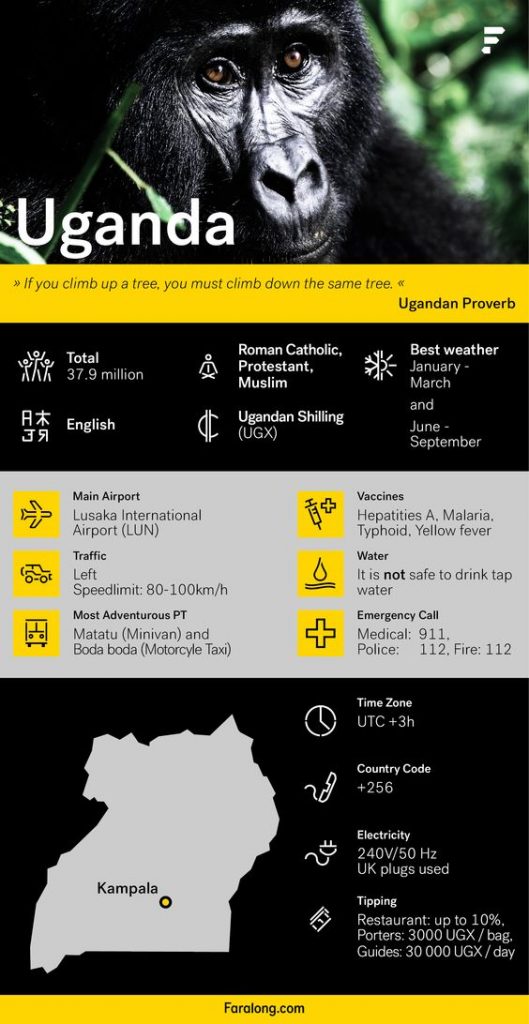
Credit: faralong.com[/caption] Regardless of its rather small size (the same as Oregon state in the U.S.), Uganda offers a great variety of experiences and places for travellers to explore. As a volunteer in Uganda you will be able to see diverse landscapes - from the mountains to forests and the beaches along Lake Victoria. Apart from the things you'll learn from your work, there's so much to explore in your free time. The Ugandans are known to be among the happiest and most welcoming people worldwide, making Uganda a great place to volunteer. And there are a lot of opportunities to do so. The country has been through a lot - which makes the people's positivity even more remarkable. Since its independence in 1962, Uganda has been shaken with guerrilla warfare, human rights violations, corruption and inflation. Become a volunteer in Uganda and combine exploring the intriguing country with doing something meaningful.
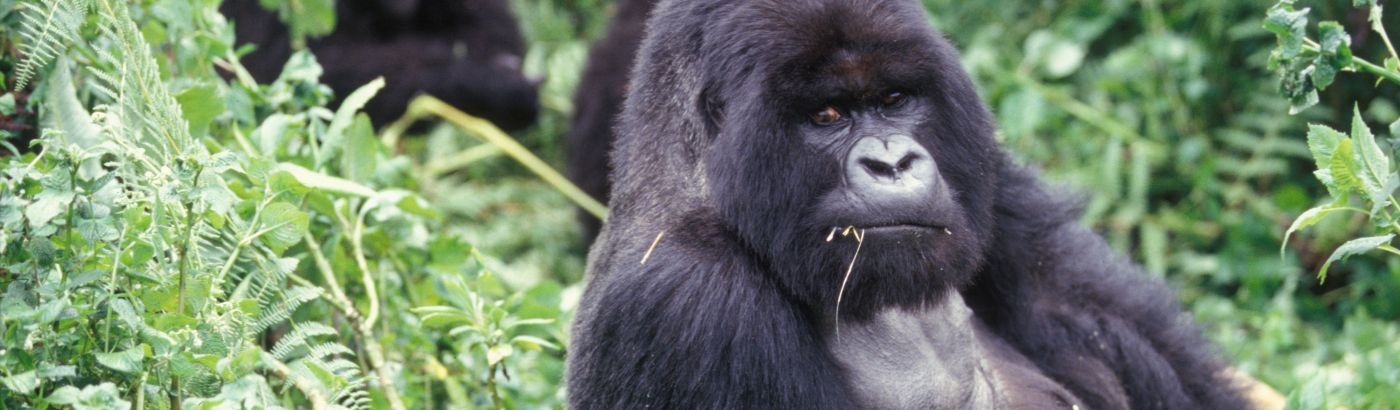
Uganda is home to the endangered mountain gorilla, with half of the world’s remaining population living in the Bwindi Impenetrable National Park. This gorilla species was discovered only 100 years ago and has since been exposed to the destruction of its habitat, hunting, and war. The mountain gorilla was also captured for illegal pet trade. Thanks to the organizations that are dedicated to conservation work, the mountain gorilla population is showing a small increase. As a volunteer in Uganda, you can support these organizations and help to protect mountain gorillas. This includes working within the communities, raising support for the conservation of the forest, its gorillas and other natural resources.
Do you want to really get to know Uganda and its people while giving something back? A great way to do so is to volunteer in Uganda in the very diverse field of community development. Your possibilities range from working in culture and arts, construction and social work. They are therefore really open to your personal interests and skills. Volunteering in culture and arts can be a powerful way to help people communicate critical messages, to creatively educate, and preserve the cultural richness in various areas. If you're looking for more physical work, volunteering in construction or becoming a sports coach might be just right for you. As a social worker you'll work closely with locals, reaching out to communities, organizing events and learning a lot about the Ugandan culture. Community development and education go hand-in-hand when it comes to improving conditions in a local town. So if you're good at teaching and want to learn a lot from your students in return, you should consider spending your time in Uganda as a teacher for children or adults.
The Ugandan health system is not centralized and lacks funding in many regions. The end result is that the quality of healthcare varies greatly between regions. The "cost sharing" system requires hospitals to charge for treatments, so many Ugandans turn to cheaper traditional medicines instead. As a result, people with illnesses wait as long as possible before they decide to seek treatment at a hospital. This increases the hospital's expenses and lowers the people's chances of getting well. As a volunteer in Uganda, you have many opportunities to help to improve the conditions in the health sector. If you are a medical professional you can make an impact by working at a hospital, while also learning a lot and developing new skills in a completely different environment. Other ways to help are to work in prevention and health education. Examples include planning awareness events, running campaigns and assisting with AIDS prevention. [caption id="attachment_11873" align="alignnone" width="1024"]
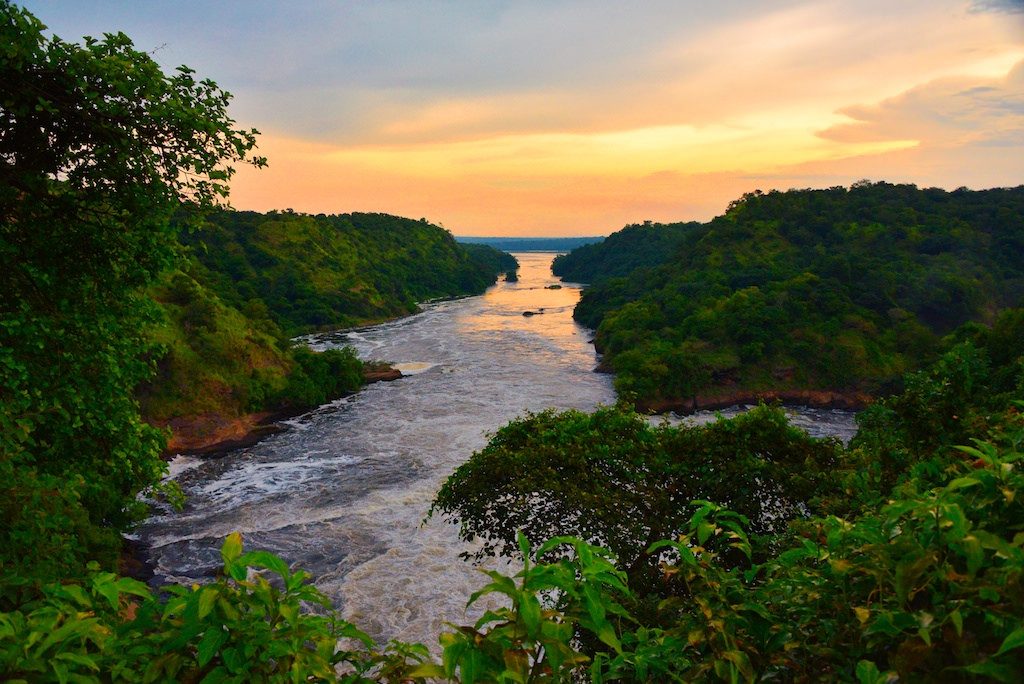
The Nile at sunset[/caption]
I was able to become fully immersed in the beautiful, authentic culture of Uganda while using my medical training to help those in several rural villages with HIV/AIDS education, malaria treatment and prevention, etc. I will be back for sure. - Anastasia, Volunteer from the U.S.
Uganda is not an expensive country to visit, but there are some things you should know as a volunteer. The country’s national currency is the Ugandan shilling. However, most restaurants in bigger towns and providers of activities such as safaris also accept US dollars. Cash is usually preferred, while paying with your credit card might cost you an extra 4 % fee. Just keep in mind that ATMs sometimes close due to a shortage of cash, so plan ahead and you won’t run out of money. Below you can see an estimated cost for when you’re visiting other cities or regions during your volunteer stay in Uganda. The table shows the average prices for backpackers in Kampala, including meals in inexpensive restaurants and a stay in a cheap hotel.
 |
 |
 |
 |
 |
| Hotel $ 38.43 | Big Mac® Meal $ 9 | Coca-Cola® $ 0.38 | Eating out $ 2.99 | Rental car $ 200/week |
 |
 |
 |
 |
 |
| Hostel $ 16.18 | Marlboro™ $ 2.52 | Beer $ 1.50 | Fuel $ 1.07 | Public transport $ 0.45 |
Straddling the equator, Uganda has a tropical climate, with two wet and two dry seasons throughout the year. The average temperatures range from 21-25°C (70-77°F), apart from the mountainous areas, where it’s much cooler. The best time to volunteer in Uganda is during the drier seasons:
If you want to volunteer in Uganda to support a mountain gorilla project, don’t forget to bring warmer clothes even during these months. It will be colder in the gorilla parks, as some are located at altitudes above 1300m (4265 ft). June – August: In the south, June and July are the driest months. The temperatures range from 16 °C (61 °F) in the morning to 27 °C (81 °F) in the afternoon. In the north, these months are part of the wet season. December – February: The south gets a little more rainfall in this period than in June and July, but it’s still less when compared to the rest of the year. During these months the north has its dry season with little rain.
During the wet season it can be more difficult to travel on the dirt roads and forest trails used for gorilla tracking. So if you’re planning to volunteer in Uganda during these months and want to help with gorilla conservation, you should ask your contact person what the situation will be like on-site. March – May: During these months there’s a peak in rainfall throughout the country, while most days have some sunshine as well. During this time, it’s warmer in the North, and again colder in the gorilla parks (at high altitudes). September – November: The weather during these months isn’t very different from March to May weather. On average, there’s a little less rain. [caption id="attachment_11874" align="alignnone" width="1024"]
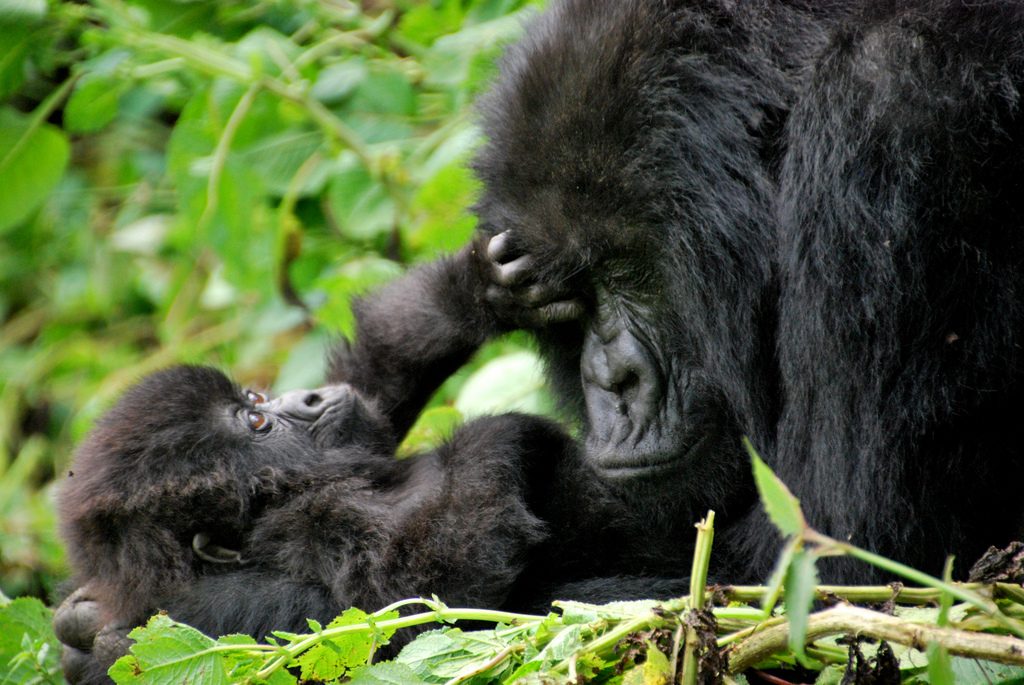
Mountain gorilla mother and her baby[/caption]
[accordion] [item title="Social conventions"]
[/item] [item title="Religion"]Uganda is very diverse when it comes to religion. Christianity (85 %) and Islam (11 %) are the most widely practiced religions, but there are also many people belonging to one of the traditional religions or atheism. All travellers and volunteers in Uganda should be respectful of religious particularities, especially when visiting religious sites. [/item] [item title="Health"]
[item title="Packing essentials"]
The official languages in Uganda are English and Swahili, with other Bantu, Nilotic, and Central Sudanic languages spoken as well. As a volunteer in Uganda, learning some words in other languages than English is a great way to learn about the culture and connect with people. Swahili key phrases: [columns_row width="third"] [column]

Hello: A friendly “Jambo”, or “Habari” (when talking with older people), will go a long way
[/column]
[column]

Danger: “Hatari” – There could be a dangerous animal close by or it’s meant as a warning; you should be cautious
[/column]
[column]

Thank you: “Asante” “I am sorry for your misfortune”: “Pole” – this applies to everything from tripping, dropping something or sneezing
[/column]
[/columns_row]
[caption id="attachment_11875" align="alignnone" width="1024"]
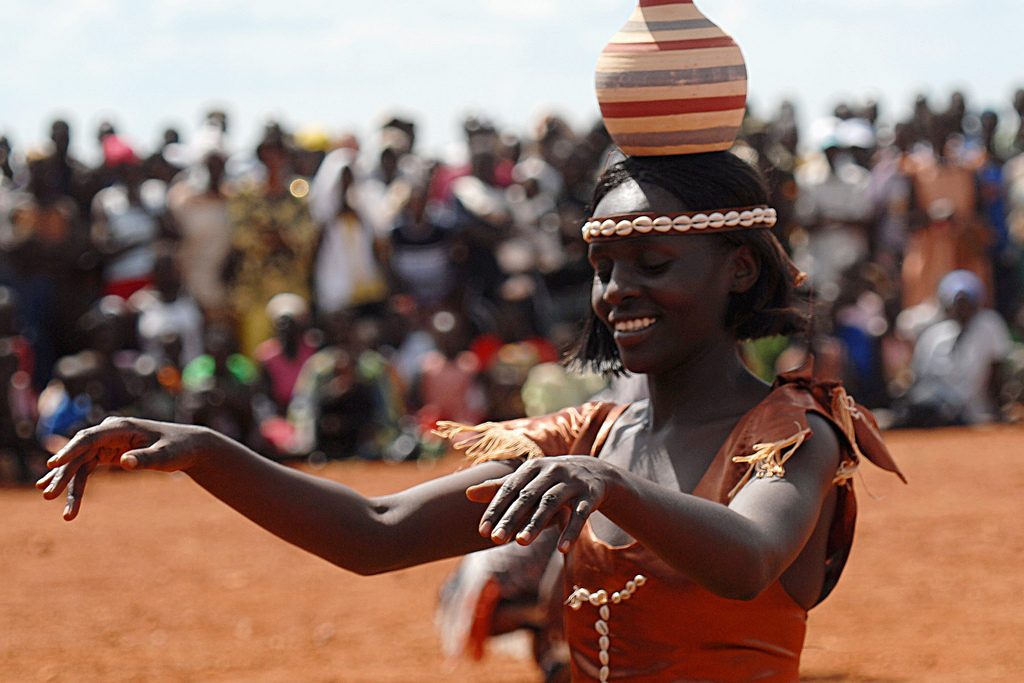
A dancer performs in Kitgum[/caption]
Uganda is so much more than Lake Victoria and the mountain gorillas living high up in the forests. As a volunteer in Uganda you'll have the time to really get to know the country, like tourists usually can't. These are some of the places you shouldn't miss: [accordion] [item title="Bwindi Impenetrable National Park"]
This national park is one of UNESCO’s World Heritage Sites and is home to half of the remaining mountain gorilla population. Apart from the mountain gorillas, you might also be able to see colobus monkeys, chimpanzees, and hundreds of species of birds, snakes, chameleons and butterflies.[/item] [item title="Bujagali Falls for water adventures"]
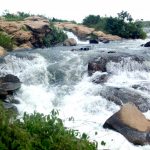
Also known as “the adventure capital” of Uganda, the area around Bujagali Falls is the place to be for adventurous travellers. The stretch of the While Nile between Jinja and Bujagali is great for rafting and kayaking, as well as watching wildlife like hippos, crocodiles and monkeys.[/item] [item title="Rwenzori Mountains National Park for hiking"]
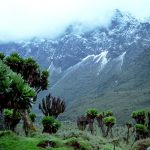
If you love to hike, you shouldn’t miss out on visiting Rwenzori. You’ll find the highest mountain range in Africa there, running 120 km (75 miles) along the Congolese border. This area offers incredible opportunities for hiking and climbing.[/item] [item title="Ssese Islands"]
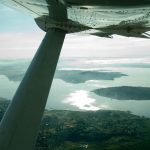
You didn't expect islands in Uganda? Well, even though the country doesn't have sea borders there's the Ssese Island chain of 84 islands, spreading along the northwest shore of Lake Victoria. If you volunteer in Uganda, this is the perfect spot to relax on white sandy beaches and watch some beautiful sunsets.[/item] [item title="Queen Elizabeth National Park"]
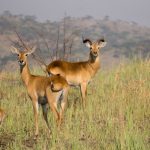
The famous National Park is definitely worth a visit. You’ll not only see a wide variety of landscapes and ecosystems, but also 96 animal and more than 600 bird species. In the remote Ishasha Plains you might even get to see the rare tree climbing lions.[/item] [item title="Lake Bunyoni"]
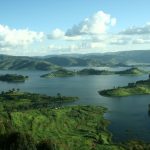
Don’t miss your chance to visit pretty Lake Bunyoni when planning to volunteer in Uganda. Surrounded by terraced green hills and dotted with fascinating verdant islands, the lake is an awesome spot for a relaxing day. If you feel like cultural activities, there are also interesting historical sites you can visit.[/item] [/accordion]
The Ugandan culture is a diverse mix of different ethnic groups, languages, history and cultural habits. As a volunteer in Uganda you will be able to immerse yourself in and become a part of the local community and culture you're living with. In your free time you can also explore some of the other towns, like: [accordion] [item title="Jinja"]
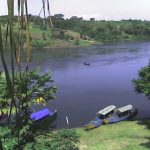
Right at the source of the Nile there's the charming town of Jinja, a great starting point for activities on and around the river. Apart from white-water rafting, kayaking, quad biking, mountain biking, horseback riding and bungee jumping, Uganda’s second largest town with its colonial architecture is also interesting in itself.[/item] [item title="Fort Portal"]
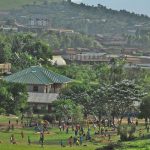
This bustling town is a great starting point if you want to explore some of Uganda’s best nature and adventure destinations. Try to find time to visit the beautiful Crater Lakes, the Semuliki National Park with its hot springs, the recently restored Toro Palace and the Karambi Tombs.[/item] [item title="Kisoro"]
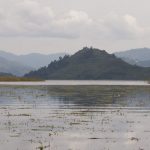
The town is a popular base for tourists visiting its beautiful surroundings. You can get stunning views of the volcanic peaks of the Virungas and visit the nearby Mgahinga National Park. Even just outside the town you can explore many walks with lakes, craters and caves.[/item] [/accordion] Tip: As a volunteer in Uganda you should also visit the bustling markets, to get to know the local culture and people.
The Ugandan cuisine uses a lot of local products like plantains, sweet potatoes, corn, beans and cassava. Due to its access to many lakes, fish are also an important part of the local diet. The Ugandan cuisine is really interesting, as it was influenced by English, Arab, Asian and especially Indian styles of cooking. Almost anywhere in the country it will be easy to get a cheap meal. So what should every volunteer in Uganda try? [accordion] [item title="Traditional food"] The traditional specialties include ugali, which is a stiff maize porridge, served with beans, chicken or meat, goat or mutton. Meat often comes with matoke, a cooked banana mash, or chapatti too. The most common fish you'll find at restaurants are the tiger fish, mukini, mputa and tilapia. Other dishes you should try during your volunteer stay in Uganda:
[/item] [item title="Sweet dishes"]A sweet dish that’s popular amongst locals is called mandazi, which is a type of doughnut. Try it with cinnamon or sugar.[/item] [item title="Drinks"]If you’re older than 18 years (the legal drinking age in Uganda), you might also want to try these specialties: The Pombe is a fermented beer made from banana or millet. You’re not a fan of beer? Warangi, a local gin, is also popular.[/item] [/accordion] Tip: When eating out, it’s always good to know a country’s tipping standards. In Uganda, tipping is always appreciated, but it’s not standard practice. If you’re at a tourist-oriented restaurant, a good aim would be to tip 10%.
The Ugandan government has introduced an online visa application system that is ready for use starting the beginning of July 2016, phasing out the old system. In a statement by the Uganda Tourism Board (UTB), volunteers and travellers coming to Uganda need to apply and obtain the visa online from now on. As a volunteer in Uganda you will need the Class G1 (Missionaries, NGOs & Volunteers) Visa. This visa costs $ 125 for 6 months, $ 250 for 1 year, $ 500 for 2 years and $ 750 for 3 years. The m
aximum processing time is10 days, but it's best to apply as early as possible. You'll need the following documents to apply for the Class G1 visa:
Ready to start planning? Find and comparevolunteer programs in Uganda and find your very own volunteer opportunity on Volunteer World. This platform is all about making volunteering in Uganda simple and transparent. Featuring more than 500 volunteer programs and over 600 social projects in 70+ countries; Volunteer World is a one-stop resource for volunteer opportunities abroad.